Commercial and Industrial RO Plant Price Guide (500 to 5000 LPH)
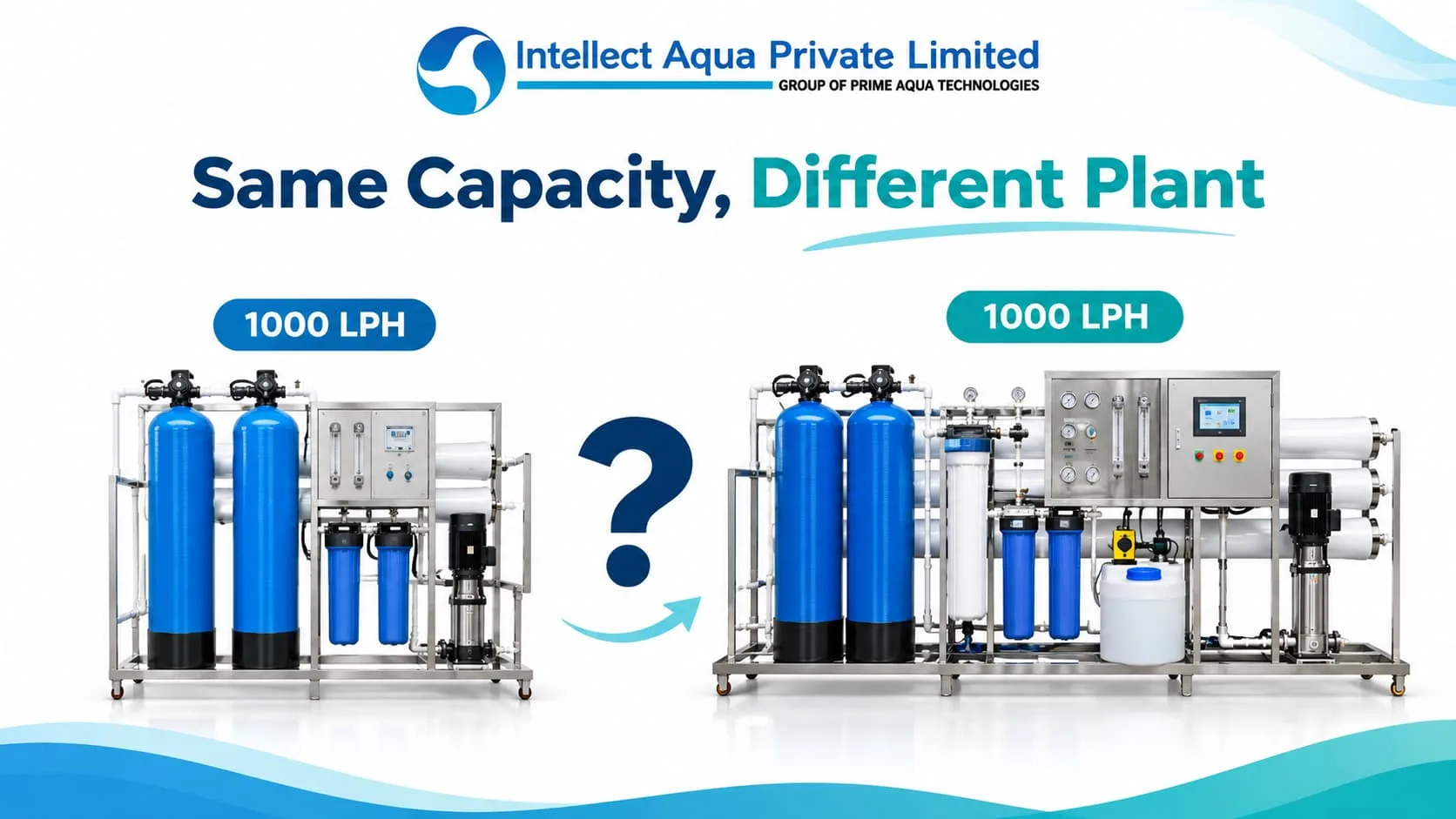
If you are looking up RO plant price for a factory, hotel, hospital, school or apartment, you have probably noticed something frustrating: two suppliers quote the "same" 1000 LPH plant and the numbers are nowhere near each other. That is not always a sign that one of them is overcharging. In most cases, the two quotes are simply describing two very different machines.
This guide explains what actually decides the price of a commercial or industrial RO plant between 500 LPH and 5000 LPH, what it costs to run one every month, and the questions you should ask before you sign a purchase order. We have not listed fixed rupee figures here on purpose. An honest RO plant price depends on your water report, so the right number comes from a site-specific quote, not a generic price list.
Why Two 1000 LPH Quotes Can Differ a Lot
"1000 LPH" only tells you how many litres of treated water the plant is meant to produce per hour. It says nothing about the water going in, the parts used, or how long the plant will last. Here is where quotes for the same capacity usually split apart:
- Feed water assumption. One supplier may design for borewell water with 800 ppm TDS, another for 2500 ppm. Higher TDS needs a stronger pump, different membranes and more pre-treatment.
- What is included. Some quotes cover only the RO skid. Others include raw water pump, pre-treatment filters, antiscalant dosing, product water tank, installation and commissioning.
- Brand of key components. Membranes, high-pressure pumps and pressure vessels come in very different grades. The brand printed on the membrane matters more than the brand printed on the frame.
- Recovery rate. A plant designed for higher recovery wastes less water but needs better design and controls.
- After-sales support. A quote that includes a service visit schedule and spares availability is not the same offer as one that ends at delivery.
So before comparing prices, make sure every supplier is quoting against the same water report and the same scope of supply.
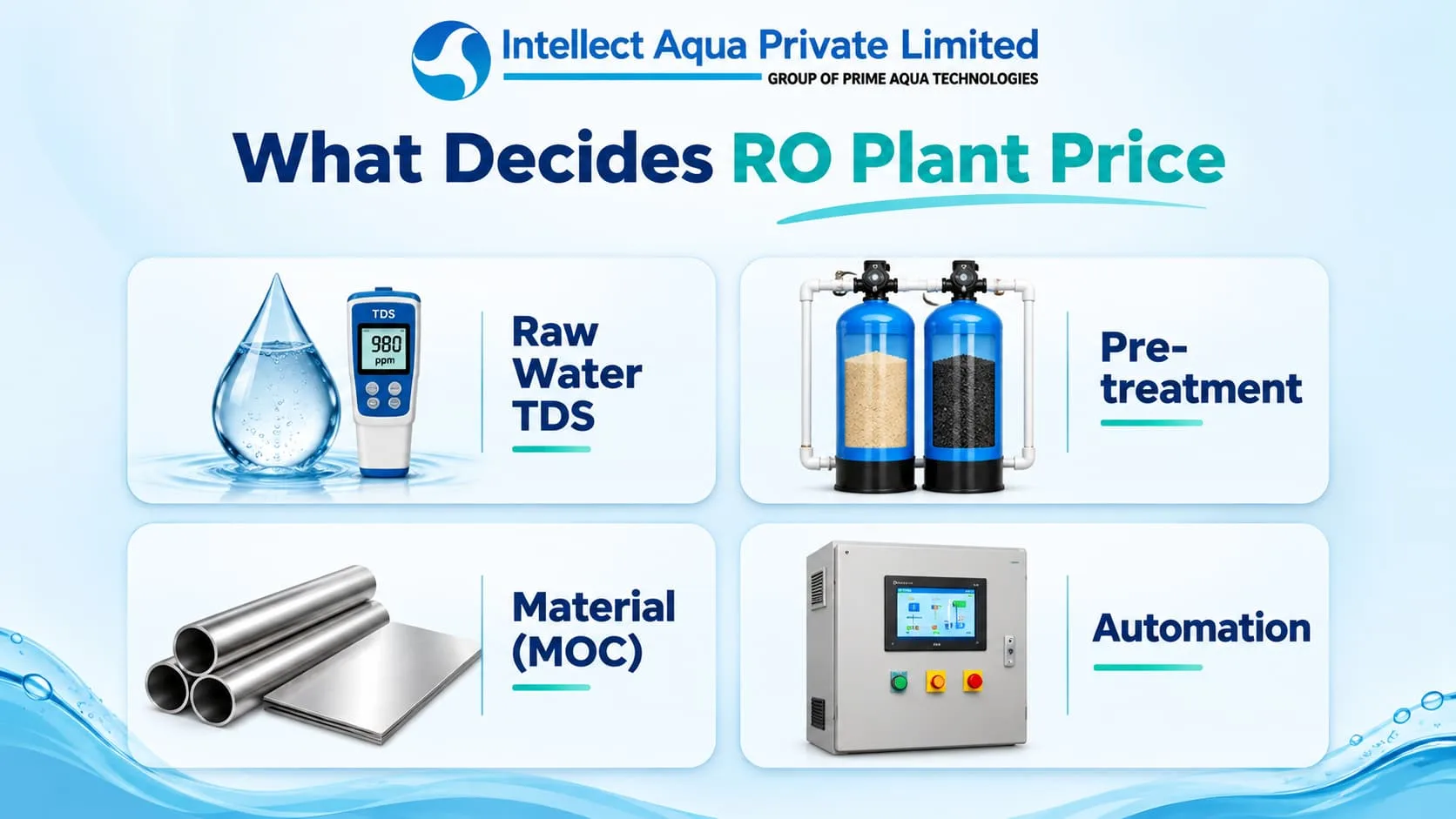
Price Factors: TDS, Pre-treatment, MOC and Automation
Capacity sets the starting point, but four factors move the RO plant price up or down far more than most buyers expect.
1. Raw water TDS and quality
Total Dissolved Solids (TDS) decide the operating pressure, the membrane type and the number of membranes. Water from a borewell in an industrial area, with high hardness, iron or silica, needs a heavier design than municipal water with low TDS. A proper water analysis (TDS, hardness, iron, silica, turbidity, pH) is the single most useful document you can give a supplier.
2. Pre-treatment
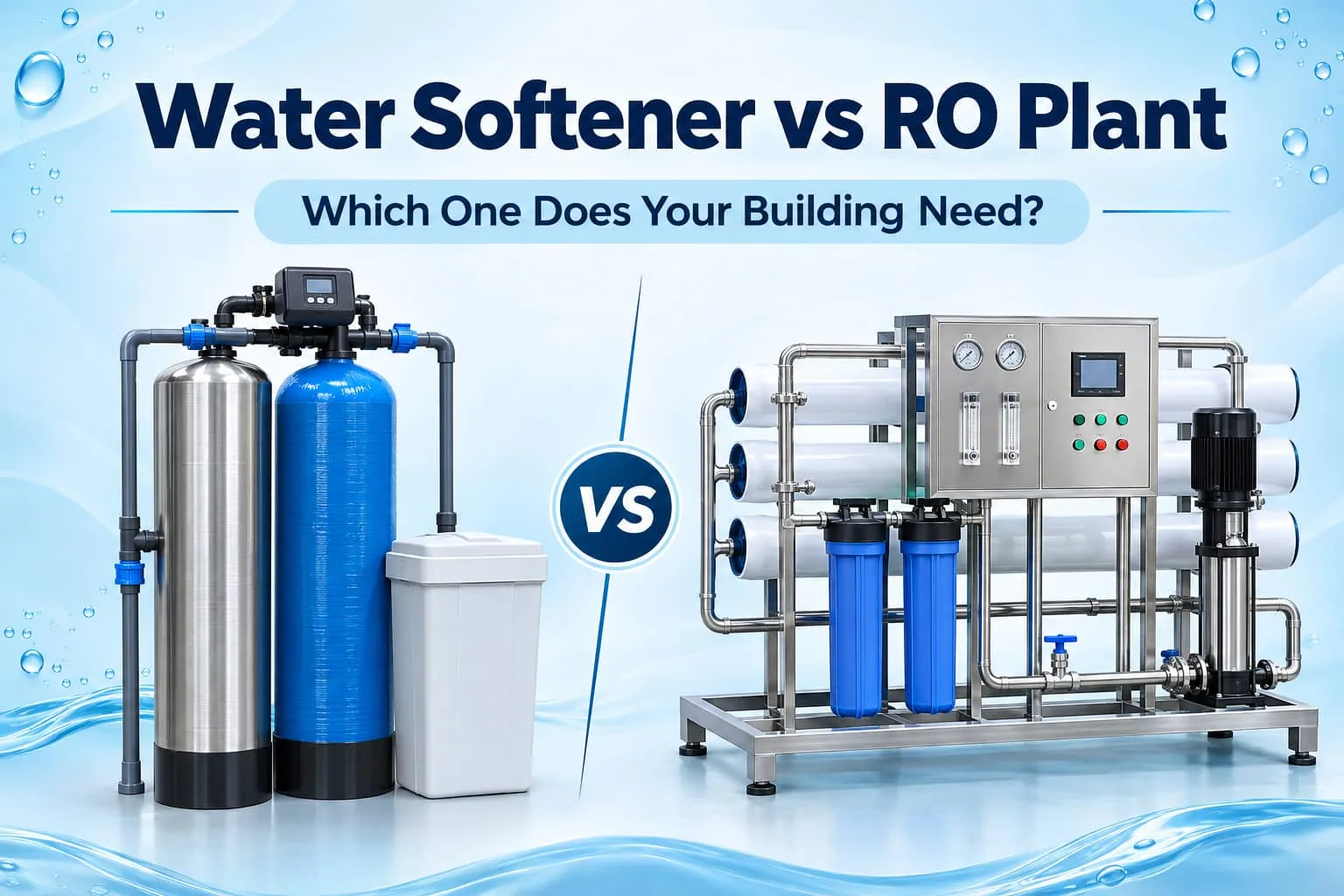
RO membranes are sensitive. If suspended solids, iron, chlorine or hardness reach them, they foul quickly and need early replacement. Pre-treatment may include a multimedia or pressure sand filter, activated carbon filter, iron removal filter, softener and antiscalant dosing. Good pre-treatment adds to the upfront cost but protects your membranes and lowers lifetime cost. Skipping it to get a cheaper quote is one of the most expensive mistakes buyers make. If your borewell water is very hard, a water softener plant before the RO stops scale from building up on the membranes. For boilers, labs and pharma units that need water with almost no dissolved salts, the RO output can be polished further in a DM plant.
3. MOC (Material of Construction)
The frame, pressure vessels and piping can be made from mild steel with coating, SS 304, SS 316, FRP or UPVC. Stainless steel and FRP cost more but resist corrosion, which matters in humid plant rooms, coastal areas and chemical-handling industries. For food, pharma and beverage use, higher-grade stainless steel is often a requirement, not a choice.
4. Automation level
A basic plant runs on manual valves and a simple panel. A fully automatic plant adds level-based auto start and stop, low pressure and high pressure trips, online TDS and flow meters, and PLC control with alarms. Automation raises the price but reduces operator dependency, prevents dry running of pumps and gives you data to spot problems early. For plants running 16 to 24 hours a day, it usually pays for itself.
RO Plant Capacity vs Typical Use
Use this table to shortlist the capacity range that fits your site. Daily output assumes roughly 20 hours of running. The final price for each capacity depends on the factors above, so ask for a quote based on your water report.
| Capacity | Approx. daily output | Typical users |
|---|---|---|
| 500 LPH | ~10,000 litres/day | Small offices, schools, clinics, restaurants, small apartments |
| 1000 LPH | ~20,000 litres/day | Hotels, hostels, mid-size apartments, small food units |
| 2000 LPH | ~40,000 litres/day | Hospitals, colleges, large communities, packaged drinking water startups |
| 3000 LPH | ~60,000 litres/day | Textile and process units, large hospitals, commercial complexes |
| 5000 LPH | ~1,00,000 litres/day | Industrial process water, boiler feed, beverage and pharma units |
Tip: do not size the plant only on today's demand. If you expect to grow, pick a design that allows adding membranes later, or size one step higher. Running a plant at 100% for 22 hours every day shortens its life.
If you are in Tamil Nadu and want a capacity worked out for your site, see our RO plant in Coimbatore and RO plant in Chennai pages. For process water and boiler feed applications, our industrial RO plant range covers higher capacities and heavier feed water.
Running Cost per 1000 Litres
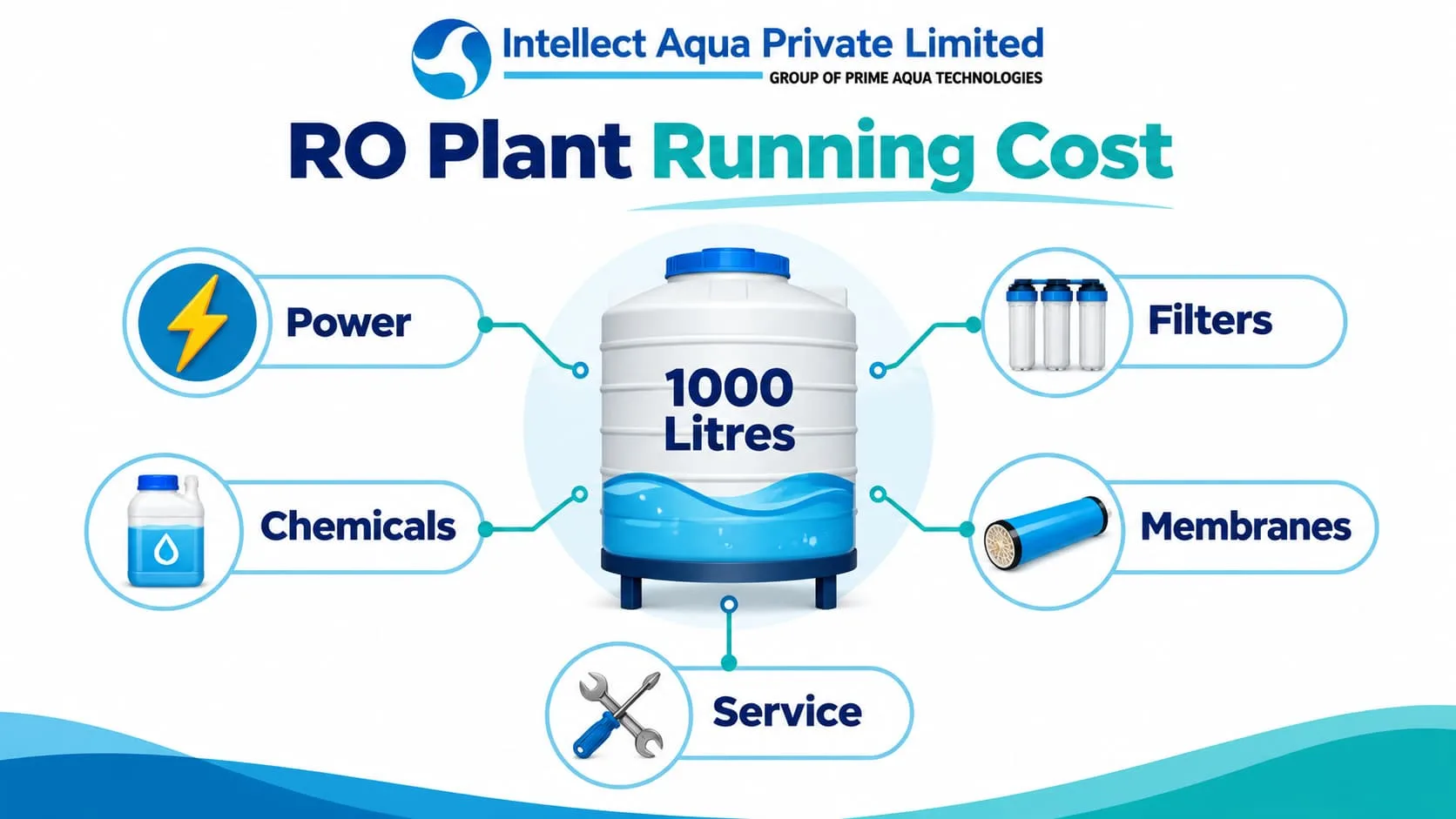
The purchase price is only part of the story. Over five to ten years, running cost often adds up to more than the plant itself. When you compare quotes, ask each supplier to estimate the running cost per 1000 litres (1 m³) of treated water at your feed TDS. It should cover these heads:
- Power. The high-pressure pump uses most of the electricity. Higher TDS means higher pressure and more kWh per 1000 litres.
- Chemicals. Antiscalant dosing, and periodic CIP (clean-in-place) chemicals for membrane cleaning.
- Consumables. Cartridge filters (micron filters) need regular replacement. Carbon and sand media are replaced every few years.
- Membrane replacement. Membranes typically last a few years with good pre-treatment and much less without it. Spread this cost across their life.
- Reject water. Every litre rejected is a litre you paid to pump. Better recovery lowers this.
- Service and labour. Operator time and scheduled maintenance visits.
A simple way to compare: ask for total monthly running cost at your daily usage, then divide by the litres produced in that month. That gives you a cost per 1000 litres you can line up across suppliers. A cheaper plant with a higher cost per 1000 litres is often the more expensive choice within two years.
An annual maintenance contract keeps this cost predictable. Our RO AMC covers scheduled servicing, membrane cleaning and performance checks so the plant keeps producing its rated output.
Checklist Before You Sign
Run through this list with every supplier before you place an order:
- Has the plant been designed on a recent raw water analysis from your site?
- Is the quoted capacity the net treated water output, at your feed TDS?
- What is the designed recovery rate, and how much reject water will you get?
- Which brand and model of membranes, high-pressure pump and pressure vessels are used?
- What pre-treatment is included, and what is left for you to arrange?
- What is the MOC of the frame, piping and vessels?
- What automation and safety trips are included?
- Are installation, commissioning, operator training and documentation included?
- What warranty applies, and to which components?
- What is the expected running cost per 1000 litres?
- Are spares available locally, and what is the service response time?
- Is an AMC offered, and what does it cover?
If a quote cannot answer most of these, the low price may not be low for long.
FAQs
What is the price of a 1000 LPH RO plant?
There is no single fixed price. A 1000 LPH RO plant price depends on raw water TDS, pre-treatment needed, MOC, membrane and pump brands, and automation level. Share your water report with a supplier to get an accurate quote.
Why is industrial RO plant price higher than commercial?
Industrial plants usually treat harder or higher-TDS water, run longer hours, and need stronger materials, more pre-treatment and more automation. They are built for continuous duty rather than intermittent use.
Which capacity RO plant do I need?
Take your peak daily water need, add a margin for growth, and divide by the hours the plant will run each day. For example, 18,000 litres a day over 20 hours points to a 1000 LPH plant.
How often do RO membranes need to be replaced?
With proper pre-treatment and regular cleaning, membranes last several years. Poor pre-treatment, high iron or skipped maintenance can shorten that sharply.
Does a cheaper RO plant cost more in the long run?
Often, yes. Lower-grade membranes, weak pre-treatment and low recovery raise power, chemical and replacement costs. Always compare the running cost per 1000 litres, not just the purchase price.
Do I need an AMC for my RO plant?
An AMC is strongly recommended for commercial and industrial plants. Regular servicing protects membranes, keeps output stable and avoids sudden breakdowns.
Get a Quote Based on Your Water
The most accurate RO plant price is one built on your own water report and daily demand. Share your raw water analysis, required capacity and site location with Intellect Aqua, and our team will recommend the right design, pre-treatment and automation level, along with an estimate of running cost.