In the Palar valley, zero liquid discharge (ZLD) is a way of life for industry. After decades of pollution concerns, tanneries, chemical units and other polluting industries in Ranipet, Vellore and Tirupattur districts operate under strict ZLD conditions, either through their own plants or through common effluent treatment plants (CETPs). Running ZLD reliably and affordably is one of the biggest operational challenges these units face. Intellect Aqua designs, upgrades and operates ZLD systems for Ranipet industries.
Whether you need a new ZLD plant, an upgrade of an existing one or a team to operate it, we cover the full scope from segregation to evaporation and salt handling.
Why ZLD Is Essential in Ranipet
- Regulation: ZLD is a standard requirement for tanneries and many chemical units in the region.
- Legacy: The Palar basin's history of contamination means regulators and communities watch closely.
- Buyers: International leather and chemical buyers audit environmental performance.
- Water: Recovered water reduces dependence on stressed groundwater.
How a Tannery ZLD System Works
1. Segregation and Pre-Treatment
Soak liquor, lime and sulphide streams, chrome streams and general effluent are collected separately. Sulphide is oxidised, chrome is recovered and high-salt soak liquor is handled separately. See ETP for Ranipet.
2. Combined ETP
Equalisation, primary clarification and biological treatment reduce organics and suspended solids.
3. Tertiary Treatment and UF
Sand, carbon and ultrafiltration protect the membranes from fouling.
4. Multi-Stage RO
RO recovers most of the water for reuse in tanning and washing. High-recovery stages concentrate the reject further.
5. Evaporation
RO reject and segregated high-salt streams are concentrated in a multiple-effect (MEE) or MVR evaporator. Condensate is reused.
6. Salt Recovery and Solids Handling
The concentrate is crystallised and dried. Where the quality allows, recovered salt can be reused in soaking or pickling, reducing purchased salt.
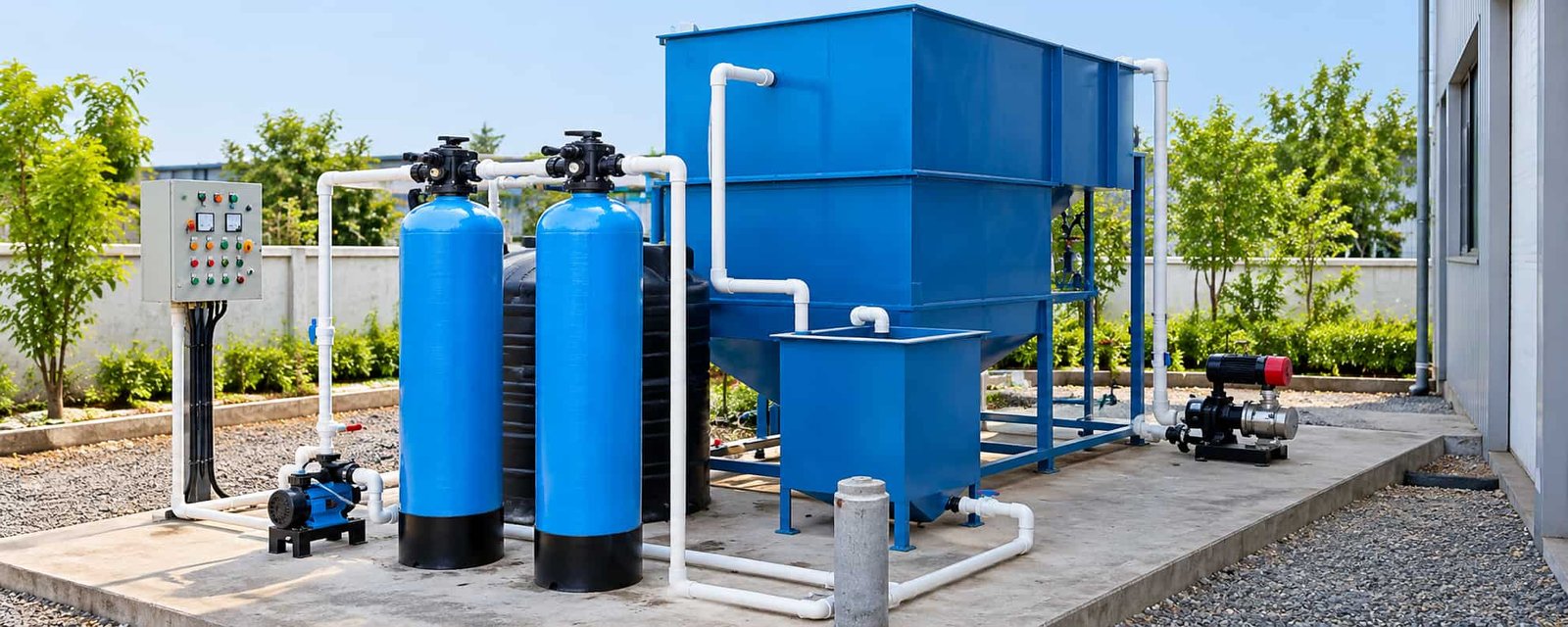
Lessons From the Palar Valley
Ranipet's tanneries were among the first in India to be pushed into ZLD, and the cluster has learned some hard lessons along the way:
- Plants designed on a single sample break down when the hide mix or season changes
- Mixing soak liquor with general effluent overloads the RO and evaporator
- Skipping sulphide oxidation creates dangerous hydrogen sulphide in collection tanks
- Evaporators sized on optimistic RO recovery fall behind within months
We build these lessons into every design. That means sampling across a full production cycle, keeping salty and toxic streams separate, and sizing the evaporator on realistic reject volumes.
Controlling ZLD Costs
Evaporation is the costliest stage. We maximise RO recovery, reduce salt at source (for example, by better hide preservation and soaking practices), segregate low-TDS streams and choose MEE or MVR based on steam and power costs.
Working With CETPs
Units connected to a CETP still need effective pre-treatment and segregation to meet inlet norms. We help design these systems and can advise on in-house ZLD where it makes more sense than CETP charges.
What You Get From Our Study
A written report covering your stream-wise flows and quality, chrome and salt balance, the recommended scheme, equipment sizes, power and steam demand, a layout sketch, capital cost and expected monthly running cost.
Reviving Older Tannery ZLD Plants
Many plants in Ranipet, Walajapet and Ambur were built ten or more years ago for a different production mix. We check membrane age, reject TDS, evaporator steam economy and scaling. Then we tell you which parts can be saved and which must change.
Reducing Salt and Water at Source
The cheapest effluent is the one you never create. In tanneries, desalting hides before soaking, recycling float liquors, reusing pickle liquor and adopting low-salt preservation can reduce both water and salt loads significantly. Every tonne of salt kept out of the effluent is a tonne the evaporator does not need to handle. We review your processes as part of the feasibility study and suggest practical changes that shrink the ZLD plant you need and its running cost.
Reusing Recovered Water
Recovered RO permeate and evaporator condensate are often better quality than local borewell water. They can be reused in soaking, liming, washing, retanning, dyeing, cooling towers and boiler make-up after polishing. We design the reuse network — storage, pumps and distribution lines — along with the ZLD plant, so recovered water actually reaches the process.
Paperwork That Stands Up to Inspection
Tannery ZLD plants are inspected often. We set up simple registers for daily flows, RO recovery, evaporator hours, chrome recovered, salt produced and hazardous waste sent out. With these, any inspector or buyer auditor can see at a glance that the plant is running.
Running the Plant for You
Skilled ZLD operators are hard to keep in the cluster. We can provide a full operating team, or visit regularly to support your own staff, covering membrane cleaning, evaporator descaling, chemical stock and daily logs. See our AMC options.
Why Ranipet Industries Choose Intellect Aqua
- Experience with tannery, chemical and textile effluents
- Complete scope from segregation to evaporator and salt handling
- Honest mass balance and running-cost estimates
- 15+ years of industry experience and 700+ projects
Areas We Serve
We build and upgrade ZLD systems across Ranipet, Vellore and Tirupattur districts — SIPCOT Ranipet, Walajapet, Arcot, Vellore, Gudiyatham, Pernambut, Ambur and Vaniyambadi.
We also build ZLD plants in Chennai, Hosur, Salem and Coimbatore.
Send Us Your Tannery Details
Tell us your daily hide input, processes (raw to wet blue, wet blue to finished, or both) and current treatment setup. Our engineer will visit and prepare a stream-by-stream proposal.