Karur's home textile products — bed sheets, pillow covers, towels, kitchen linen, table linen and curtains — go through extensive wet processing before export. Desizing, scouring, bleaching, dyeing, printing and washing all produce effluent that must be treated, and dyeing and bleaching units in the district operate under strict ZLD conditions. Intellect Aqua designs textile ETPs for Karur units that handle colour, chemicals, salt and organic load reliably and recover water for reuse.
Our plants are designed from samples taken across different batches and shades, so they handle your worst production days, not just the average ones.
Home Textile Effluent Is Different
Home textiles involve heavier cotton fabrics, deep shades for curtains and table linen, bright whites for bed and bath products and large volumes of washing. This creates effluent with:
- High colour from reactive and vat dyes
- High TDS from salt used in reactive dyeing
- High pH from scouring and bleaching
- Residual peroxide that can harm biological treatment
- High COD from sizes, softeners and finishes
- Lint and fibre from towels and terry fabrics
Volume and character change batch by batch, so we design from your actual production.
How a Karur Home Textile ETP Is Built
- Lint and fibre screening that copes with cotton fluff from towels and terry fabric
- Cooling and equalisation, because desizing and scouring drops arrive hot and alkaline
- Neutralisation using flue gas or acid, depending on what is available on site
- Chemical treatment and clarification to remove colour and suspended solids
- Biological treatment sized for starch and size from woven fabric
- Secondary clarification and filtration to produce clear water
- UF and RO to recover soft water for the dye house; see RO plants in Karur
- Brine handling through reuse, evaporation or a CETP, as part of ZLD
Why Textile ETPs Fail — and How We Prevent It
- Lint blocking pumps and filters: We install proper screens upstream.
- Peroxide killing biology: We neutralise before the biological stage.
- Shock loads from dark shades: We size equalisation for real batch patterns.
- Sludge escaping: We size clarifiers for peak solids.
- RO fouling quickly: We add UF where needed.
- Chemical over-dosing: We set doses from jar tests.
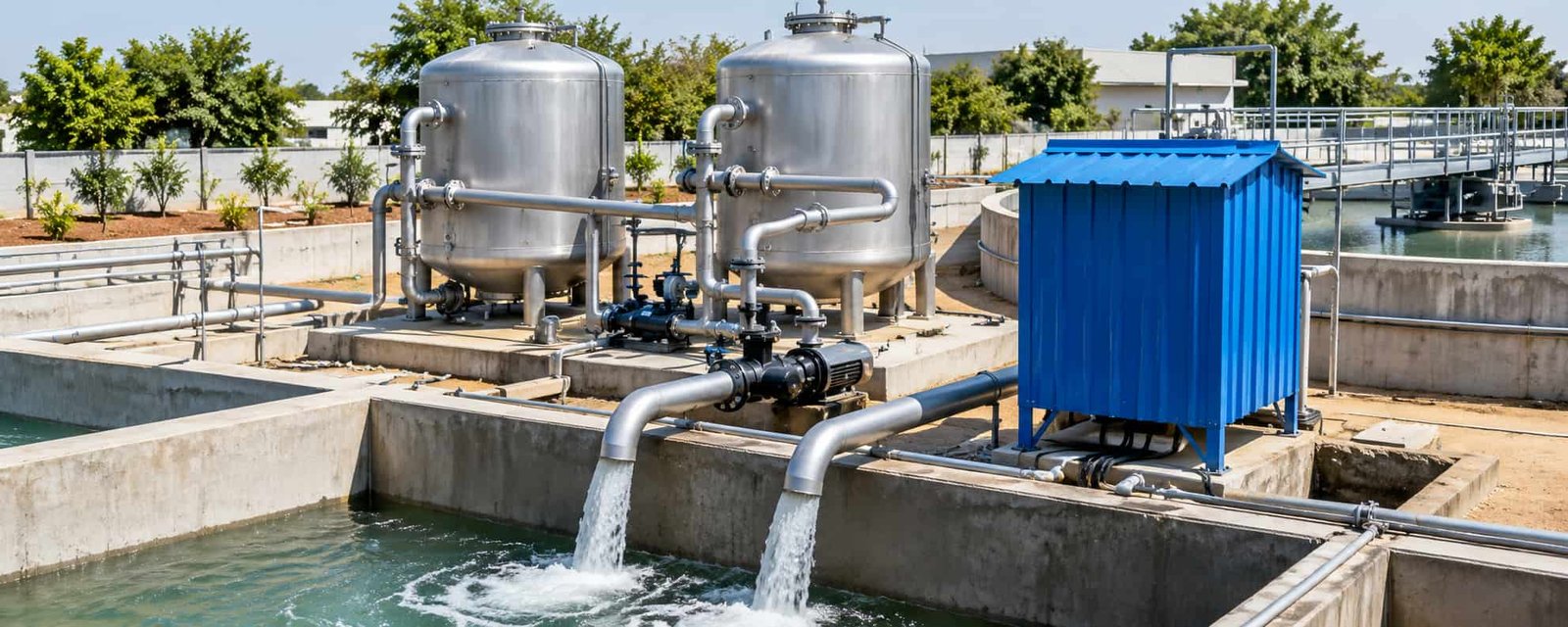
Water Recovery for Better Processing
RO-recovered water is soft and low in TDS — ideal for dyeing and finishing. Returning it to production improves shade consistency and brightness and reduces fresh-water purchase. For fresh water, a water treatment plant with iron removal and softening completes the picture.
Supporting Export Compliance
International buyers increasingly audit wastewater treatment at their suppliers' processing units. We design plants with clear flow measurement, sampling points, log sheets and operating procedures that make audits smoother and show consistent performance.
Older ETPs in Karur
Many Karur plants were built when production was smaller and buyers asked fewer questions. Signs of overload include colour in the outlet, rising COD, and sludge carrying over from clarifiers. Often a bigger aeration tank, better chemical dosing or an extra clarifier fixes the problem without a full rebuild.
Where the Money Goes
Chemicals, power and sludge disposal are the big running costs. Dosing pumps linked to flow, efficient diffusers and a properly sized filter press usually cut these costs noticeably. Reusing recovered water also cuts what you spend on bore water and tankers.
Setting Up a New Unit
If you are adding a new dye house or expanding into bleaching, plan the ETP before the machines arrive. We size it for your target production, leave space for a future RO and evaporator, and prepare the technical details for your TNPCB consent application.
Separate Sewage from Effluent
Domestic sewage from staff toilets, canteens and hostels should go to a separate STP, not the textile ETP. This keeps ETP treatment simpler and cheaper.
Sludge Handling
Chemical sludge from textile ETPs must be dewatered and disposed of through authorised channels. A correctly sized filter press reduces sludge volume and disposal cost.
Ongoing Support
We can run your ETP with our own operators, or support your staff with scheduled visits, chemical supply and testing. See AMC plans.
Why Karur Units Choose Intellect Aqua
- Textile ETP experience across Tamil Nadu's major clusters
- ETP, RO, ZLD and water treatment under one roof
- Design for compliance, audits and water reuse
- 15+ years of industry experience and 700+ projects
Intellect Aqua is a Coimbatore-based water and wastewater treatment company that builds and services plants across Tamil Nadu, including Karur
Areas We Serve
We build textile ETPs across Karur district — Karur town, Thanthoni, Vengamedu, Pasupathipalayam, Velayuthampalayam, Pugalur, Kulithalai and Aravakurichi.
We also build textile ETPs in Tiruppur, Erode, Coimbatore and Chennai. For other industries, see ETP in Karur.
Book a Site Assessment
Tell us your daily production in kilograms, the processes you run and your current ETP setup. We will visit, sample the effluent and send a clear proposal.